Published Wednesday, 1 April 2026
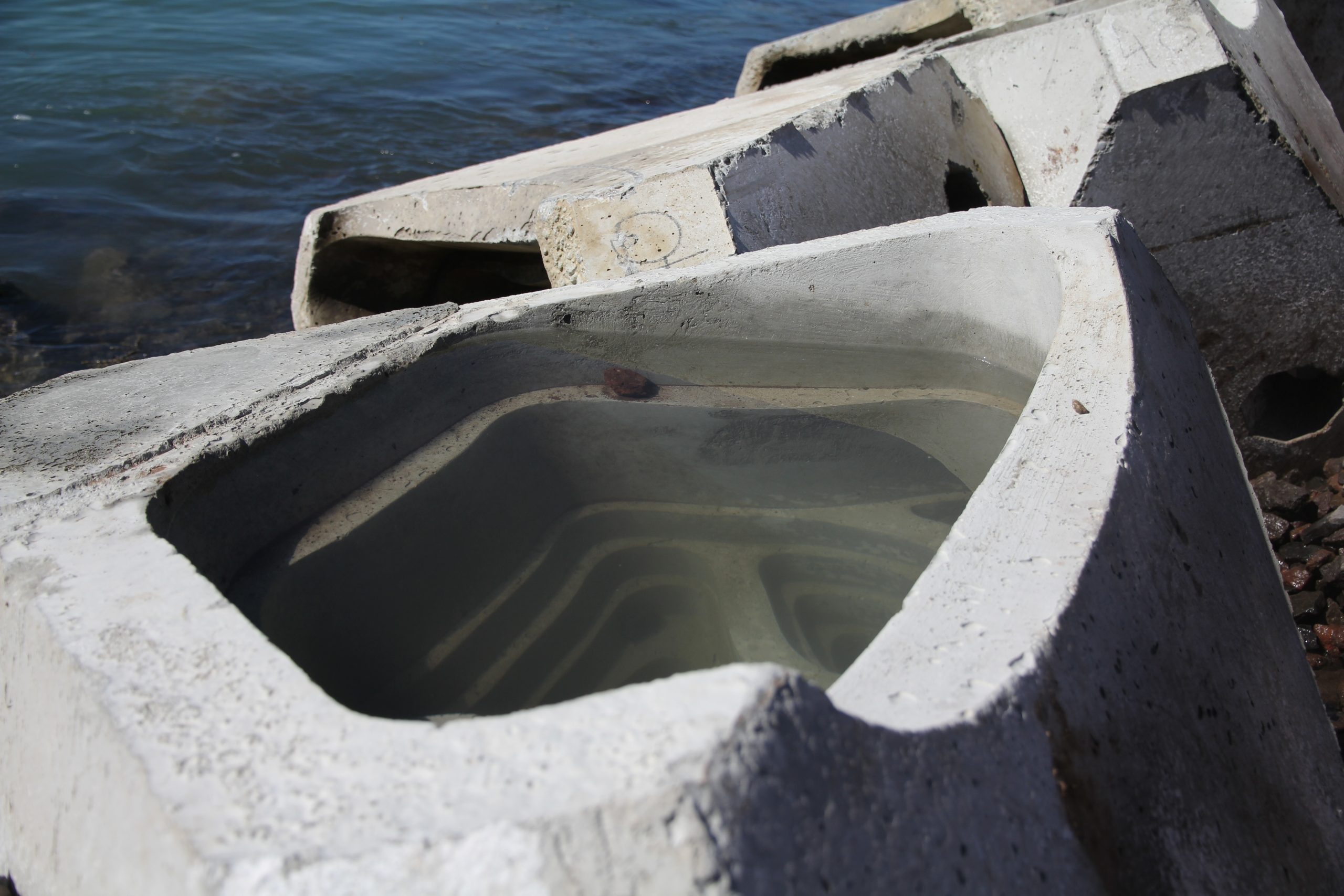
Lyttelton Port Company is installing ecologically engineered (eco-engineering) habitat units to encourage marine life at the new reclamation.
Approximately 220 ECOncrete ‘Coastalock’ units will be installed in cluster patterns to create intertidal and subtidal habitat. The first cluster, consisting of twenty-two units, weighing 3.5 tonnes each, have been installed along the eastern side of the reclamation seawall.
Head of Environment and Sustainability, Crystal Lenky, says the new units are very different from the traditional quarry rock used on seawalls around the Port.
“These Coastalock units can be positioned rotationally to create small rock pools that retain water at low tide, similar to natural rocky reefs,” said Crystal.
“Quarry rock does its job structurally, but it lacks ‘nooks and crannies’ and doesn’t hold water at low tide. By creating pools and textured surfaces, we can better mimic natural reef environments,” added Crystal.
Some units were installed in February as a trial, and initial results are positive.
“We’re starting to see green algae growing on them, which is what we want to see for encouraging organisms to establish,” said Crystal.
The eco‑engineering design was developed in collaboration with marine ecologist Oliver Floerl from LWP (LandWaterPeople), who worked with LPC on the concept, design, and installation.
Oliver says that the project followed a thorough process, from initial feasibility to detailed design and installation.
“There are a lot of projects that do only what’s necessary; this goes well beyond that. LPC had a really meaningful vision with the outcome,” said Oliver.
“It’s been a really good process with structural engineers and geotechnical specialists all involved,” Oliver added.
Further eco‑engineering features are planned for other parts of the reclamation. On the southern seawall, smaller “living seawall” habitat boulders will be installed to complement the larger units already in place.