Published 9 September 2026
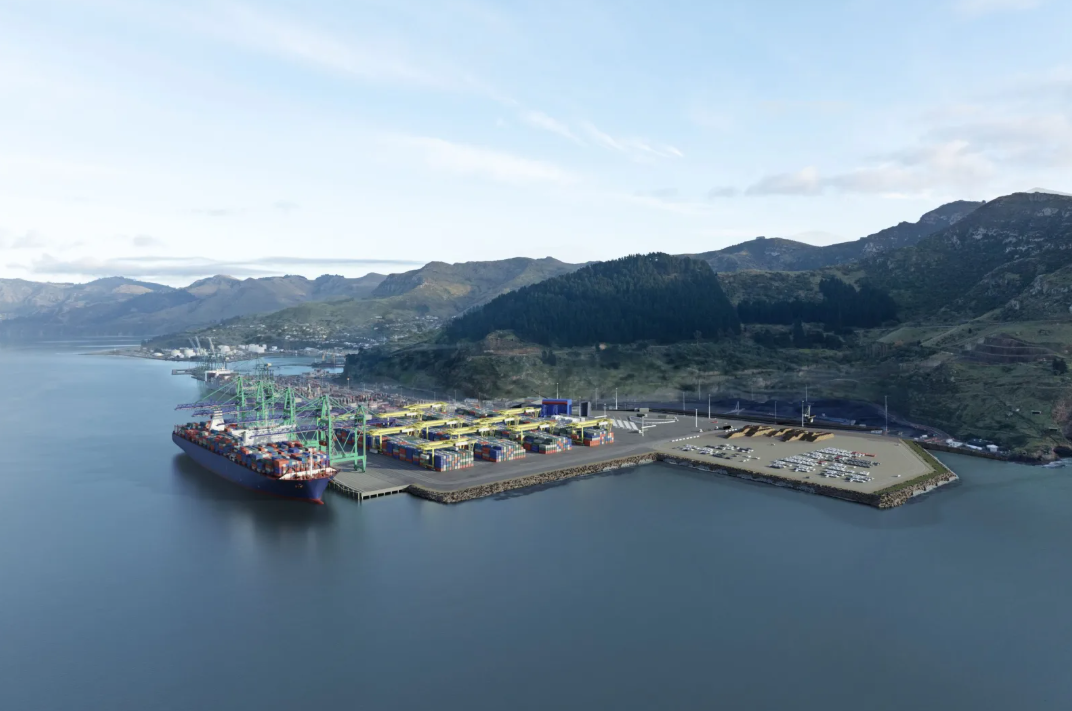
Lyttelton Port Company has developed a Sustainable Infrastructure Framework for the Te Awaparahi Bay Port Expansion and Resilience Project. The Framework goes beyond meeting consent requirements and draws on international good practice to help deliver positive outcomes for biodiversity, climate resilience, sustainable procurement, efficient use of resources, emissions reduction and waste minimisation throughout design and construction.
The new wharf and container terminal have been designed with future climate scenarios in mind. This includes the potential effects of sea-level rise, coastal inundation, storms, heavy rainfall and flooding. Considering these risks now will help ensure the infrastructure and essential services remain resilient over time.
The project will also support LPC’s climate transition planning framework by reducing operational emissions and contributing to a lower-emissions future for Canterbury.
Providing shore power for ships and using electric container handling equipment are two of the initiatives that will help LPC meet its short-term and long-term emissions reduction targets, while also improving local air quality.
During construction, LPC will track material, fuel and energy use. LPC does not offset emissions, but native planting will be undertaken on suitable Port land to support biodiversity and land restoration initiatives. This will build on work already underway across Whakaraupō Lyttelton Harbour through Whaka-Ora Healthy Harbour and other partnerships, while contributing to the goals in LPC’s Biodiversity Roadmap 2025–2030. Waste minimisation will also be a key objective, with a target to divert 80% of construction waste from landfill.
Protecting the unique wildlife of Whakaraupō Lyttelton Harbour is a key priority, particularly Hector’s dolphins. A Marine Piling Management Plan will be implemented throughout wharf construction.
Head of Environment and Sustainability Crystal Lenky says the knowledge gained through many years of acoustic monitoring during the Cruise Berth Project has significantly improved our understanding of how marine piling noise may affect Hector’s dolphins.
“LPC will apply those lessons to the Te Awaparahi Bay Port Expansion and Resilience Project and use technologies such as bubble curtains to further reduce underwater noise, together with a real-time acoustic monitoring buoy to continuously measure piling noise levels and detect marine mammals in the area,” says Crystal.
Construction Environmental Management Plans will set out how environmental effects such as dust, lighting, water quality, traffic, visual effects and construction noise will be monitored and managed in accordance with consent requirements.