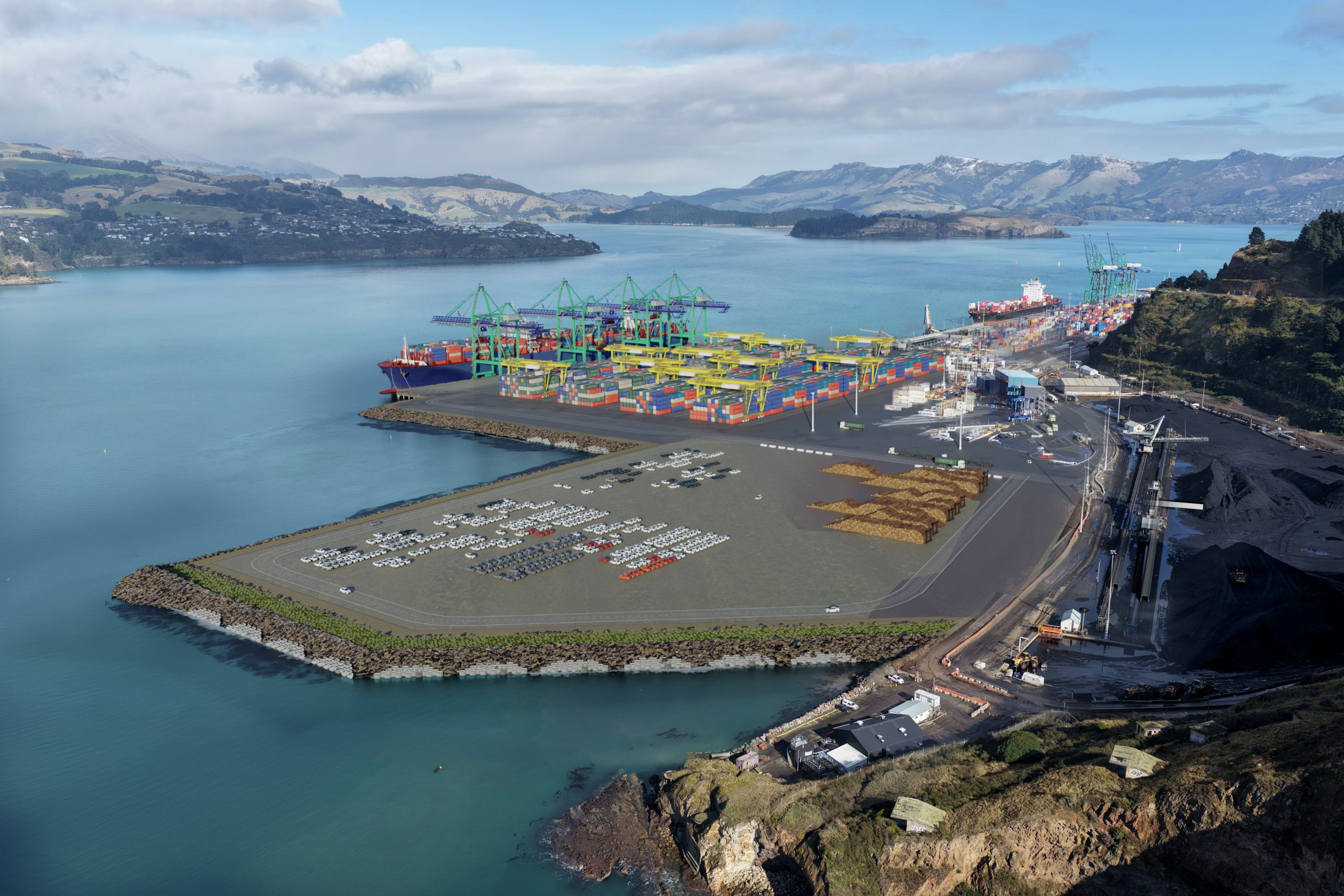
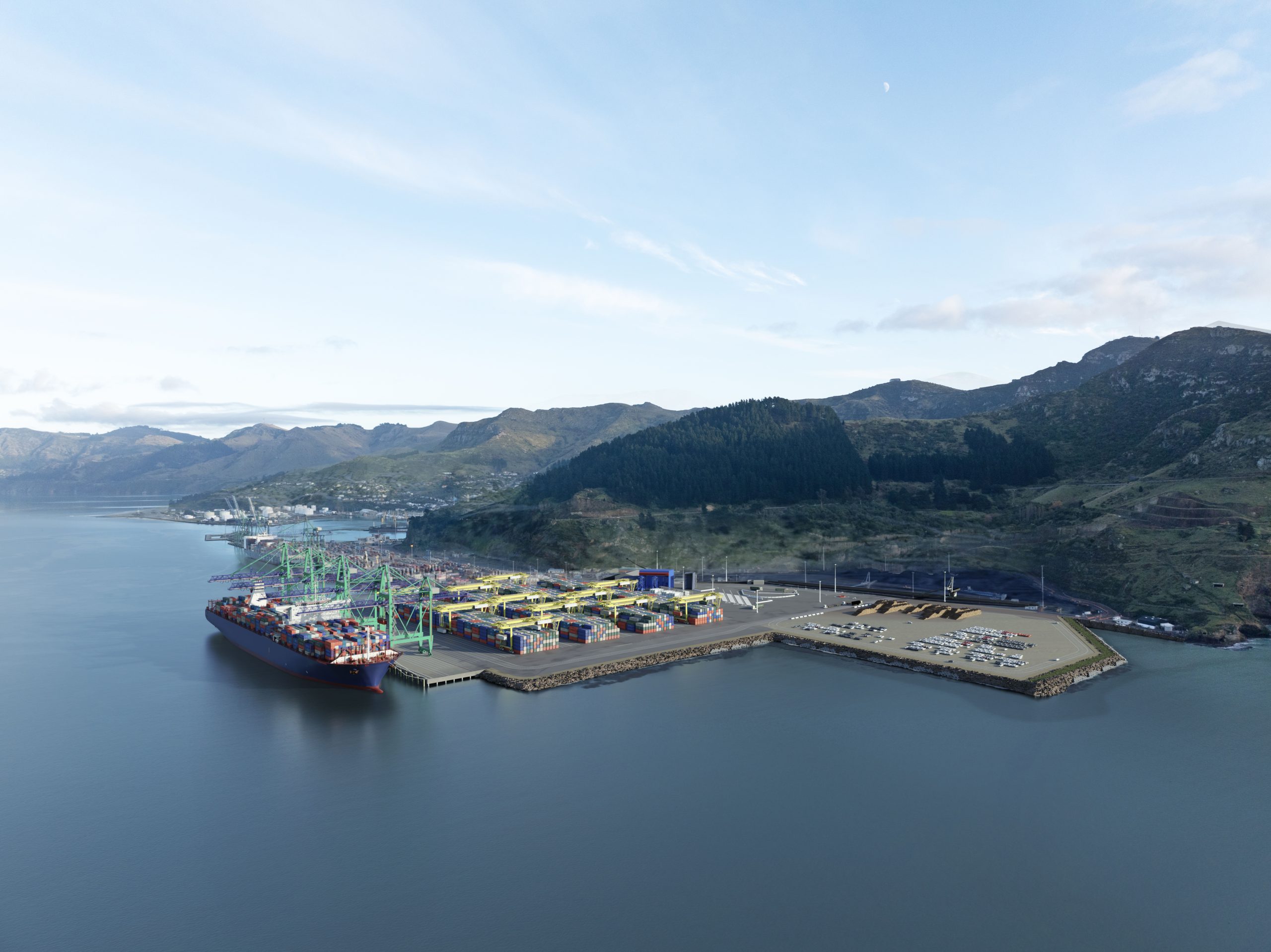
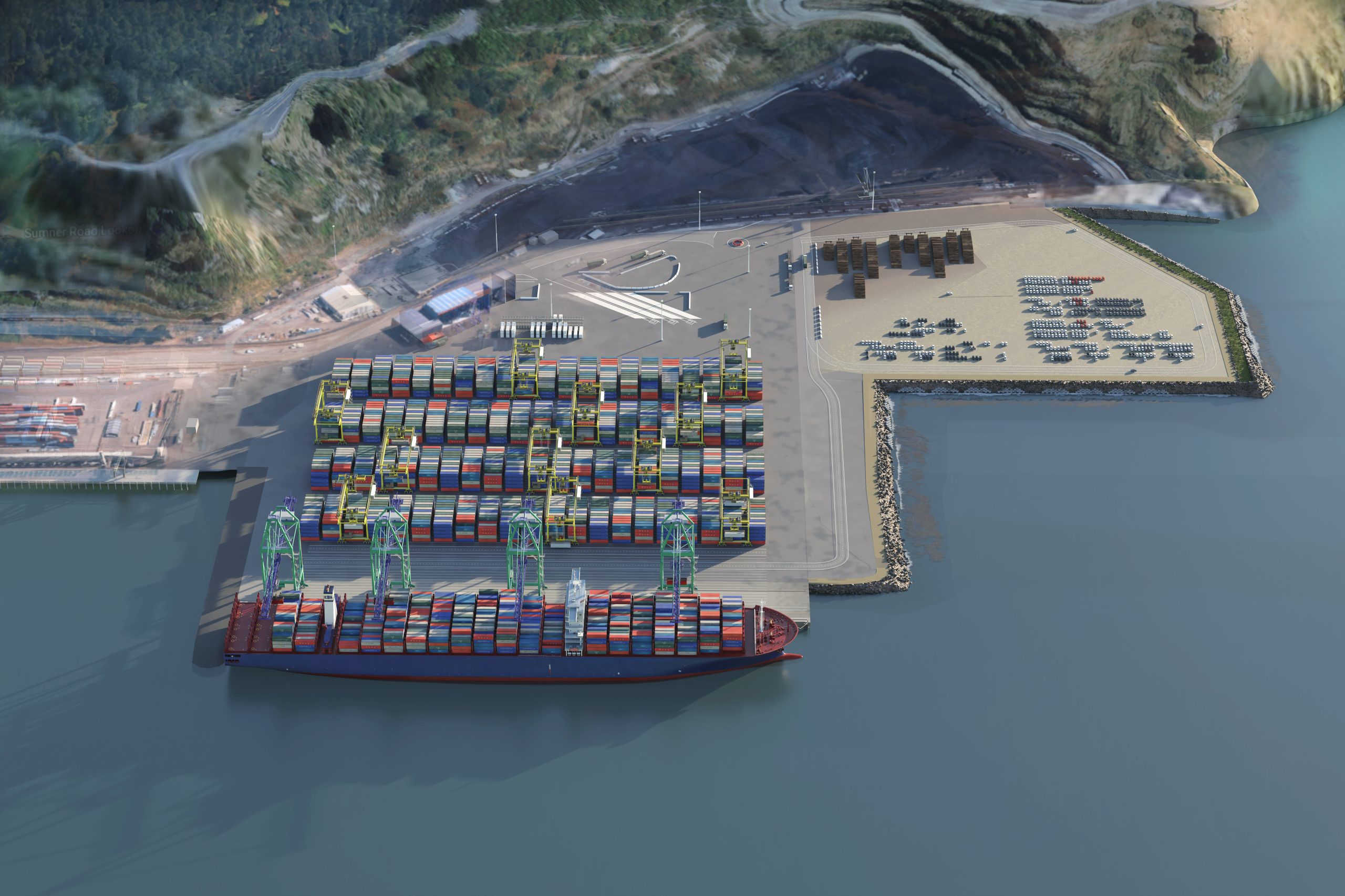
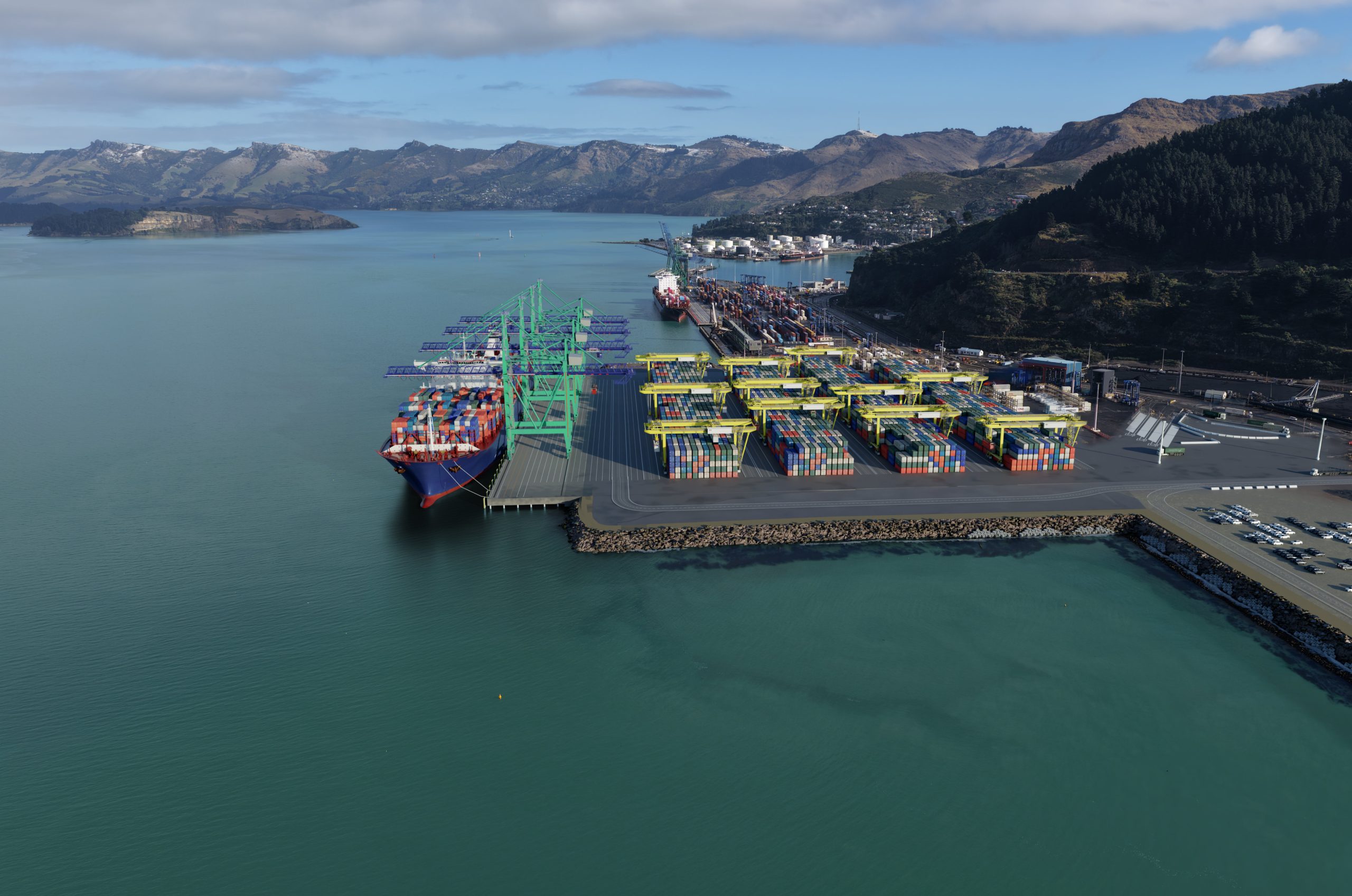
The Te Awaparahi Bay Expansion and Resilience Project will deliver a new deepwater wharf and container terminal at Te Awaparahi Bay, helping secure the long-term future of the South Island’s key international trade gateway. Lyttelton Port Company (LPC) and Christchurch City Holdings Limited (CCHL) will invest $821 million to build it.
The project supports the long-term growth and resilience of Lyttelton Port and the wider South Island supply chain. Some of the Port’s existing container berth infrastructure was damaged during the Canterbury earthquakes. While the wharves remain safe and operational, another major seismic event could affect their availability.
The project will also allow LPC to accommodate larger vessels, support growing import and export volumes, and strengthen the South Island’s connection to international markets. Once complete, the terminal will be able to service vessels of up to 15,000 TEU and lift the Port’s annual berth capacity to around 850,000 TEU.
Completion is expected in 2031.
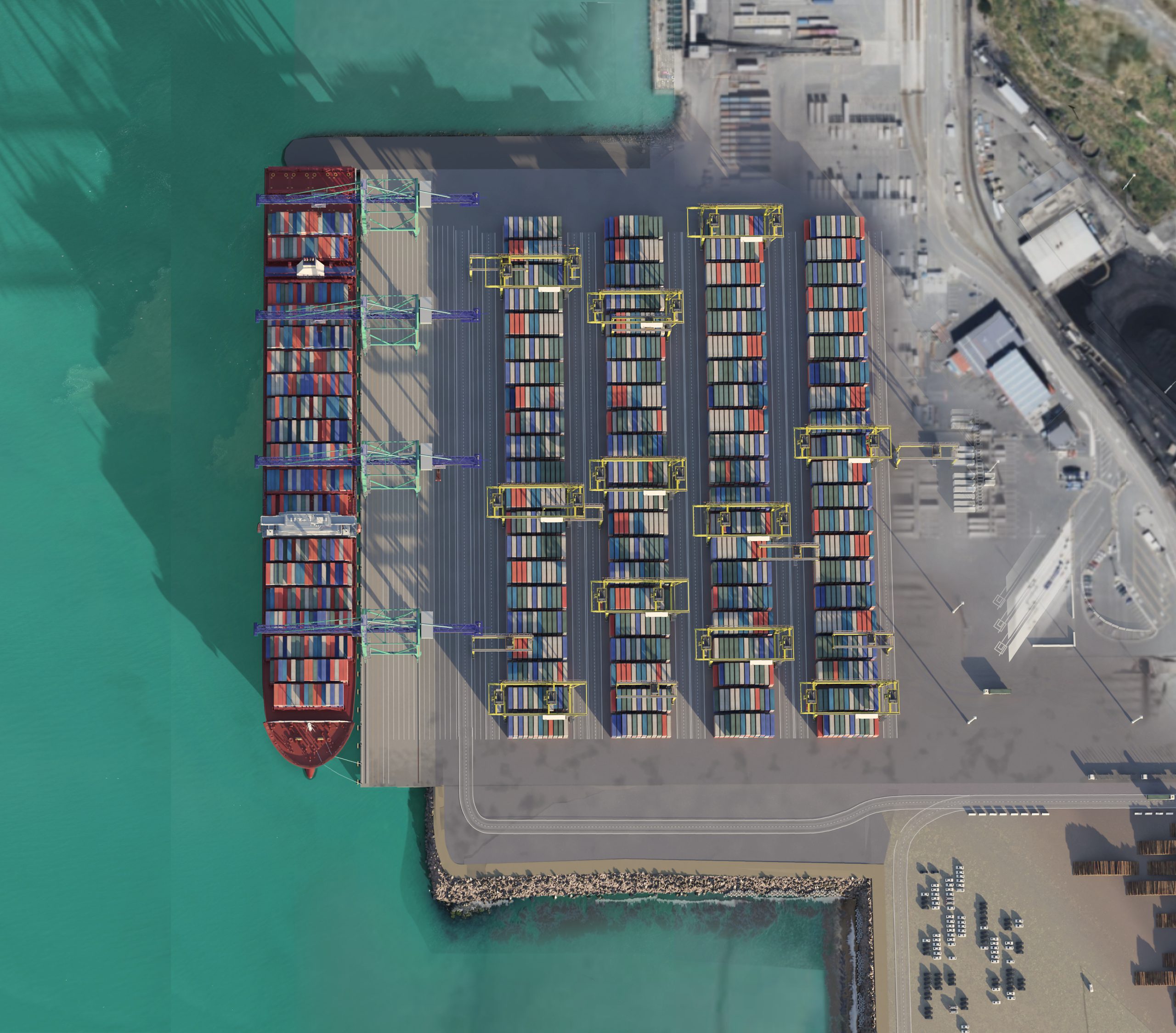
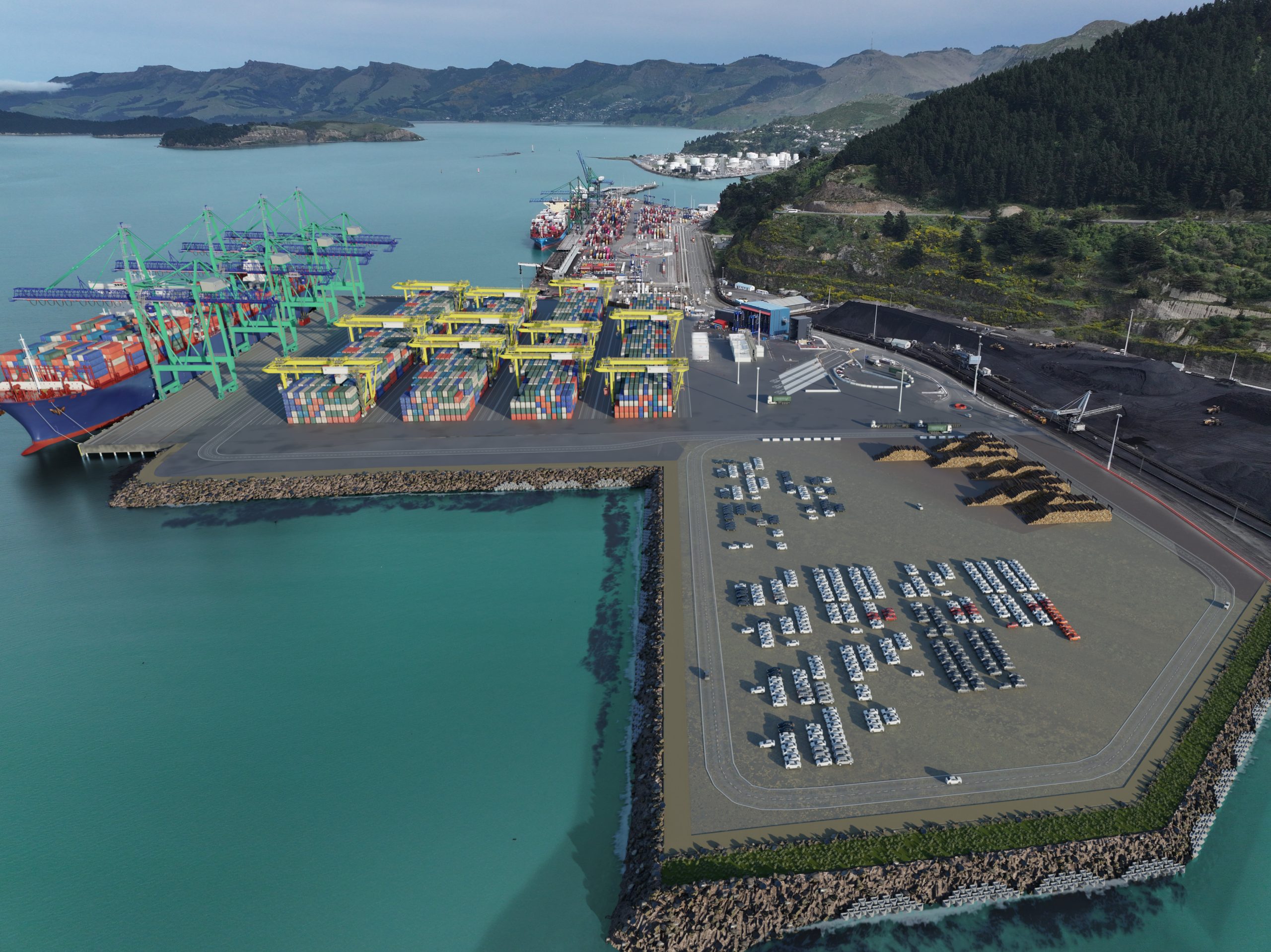
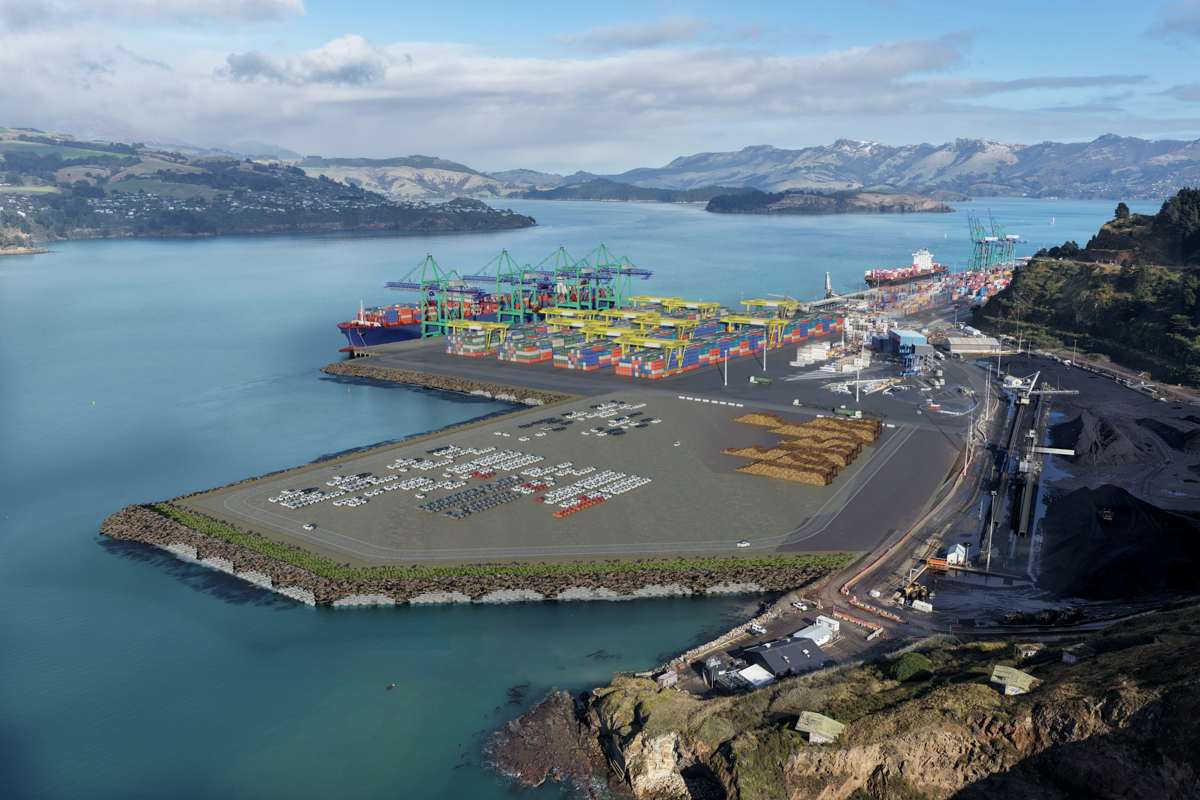 The project will create a new container terminal on land already being constructed through the Te Awaparahi Bay reclamation project. Construction will include a 388 metre deepwater wharf, a 5 hectare container terminal, four new ship-to-shore cranes and semi-automated gantry yard cranes. The new terminal will also include supporting infrastructure designed to improve the efficiency, capacity and resilience of container operations.
The terminal is being designed to safely and efficiently handle larger ships and growing cargo volumes while supporting the South Island’s future trade needs.
Construction of the Te Awaparahi Bay Expansion and Resilience Project will occur on land already consented and currently being completed through the existing Te Awaparahi Bay reclamation programme. Once the current reclamation is completed, no further reclamation is required for this project.
The project is being delivered by LPC in partnership with its shareholder, CCHL. The investment will be funded through debt raised by LPC, together with around $300 million of equity from CCHL.
LPC has developed a Sustainability Framework for the Te Awaparahi Bay Terminal Expansion based on international frameworks, which identifies opportunities to deliver positive outcomes in areas such as biodiversity, climate resilience, resource efficiency and waste minimisation.
Carbon reduction opportunities are being investigated through design and construction. We will track and report the project’s actual material, fuel and energy use during construction so that reduction opportunities can be measured. Whilst LPC does not offset carbon emissions, native planting will be undertaken across suitable areas of port land, building on the approach used for the reclamation project and supporting LPC’s wider biodiversity and land restoration goals.
LPC will implement a Marine Piling Management Plan for the marine piling works. This will include marine mammal observer(s), establishment of a marine mammal observation zone so if dolphins are observed within this zone, all piling activities must cease immediately, or not start up, until the mammals have vacated the zone, and requirements for soft starts to provide a warning to dolphins of elevated noise levels.
As the breakwater has been in place for several decades, it has provided habitat for a range of species, including several types of seabirds such as white-flippered penguins / Kororā as well as marine species such as crayfish / kōura. Before removal of the breakwater begins, a Department of Conservation certified penguin detection dog will check for penguins. If penguins are identified, a suitably qualified and experienced ecologist will provide advice on the appropriate action to take. An important mahinga kai species for mana whenua, koura, are also being relocated to suitable habitat elsewhere within the harbour.
LPC has a good understanding of how dredging related sediment is transported in the harbour, developed through extensive monitoring over many decades and most recently for the 2018 Channel Deepening Project and subsequent maintenance dredging campaigns. The berth pocket dredging is a relatively small volume and is comparable to a typical annual maintenance dredging campaign. Any temporary, localised sediment plumes will be managed through an adaptative management framework as required under LPC’s Capital Dredging Consent including real-time turbidity monitoring.
Construction Environmental Management Plans will be developed in accordance with LPC’s Construction Environmental Management System and consent requirements. These plans will set out how environmental effects, such as dust, noise, lighting, water quality and visual impacts, will be monitored and managed throughout the project.